

Campaign 04 Defensive product targeting
12.21% ACoS: what should a defensive campaign achieve?
Before deciding how much to spend on defense, say what the campaign is defending. Keeping your own product visible and introducing a shopper to a related item are different jobs. A clear purpose makes an attractive campaign ratio useful instead of letting it become the whole argument.
In 30 seconds
Define the purpose of defensive coverage before setting its allowance.
- What we see
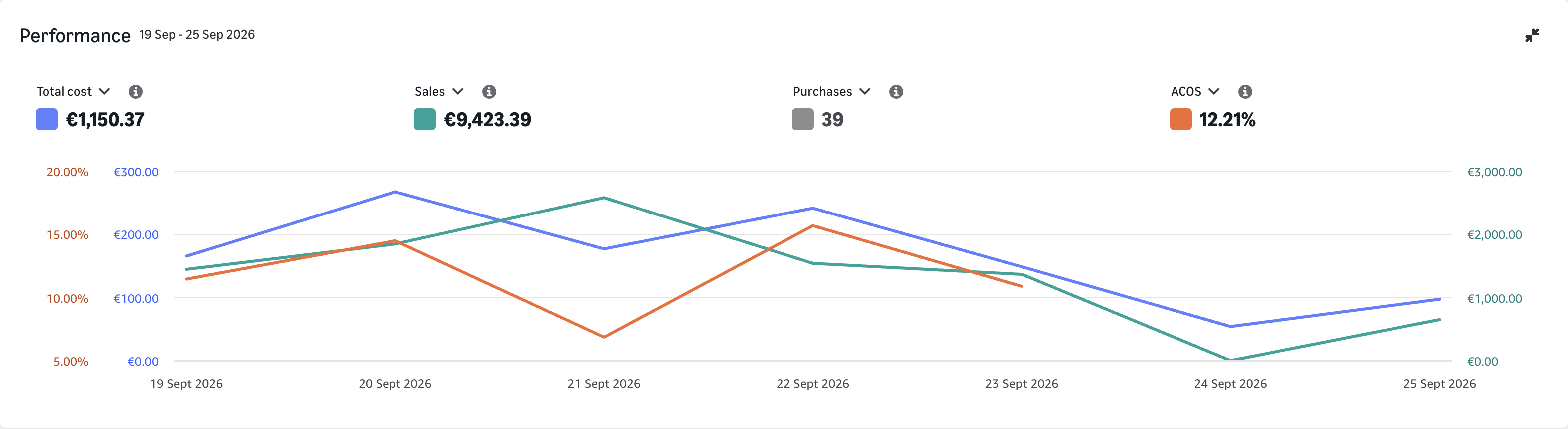
- The defensive campaign records 39 purchases at 12.21% ACoS.
- What to check
- Verify the actual target pages, advertised products and intended shopping journey.
- The next decision
- Set a coverage allowance for a named purpose rather than scaling every defensive target.
Observed campaign data from one advertising account. The steps below are proposals, not documented actions or measured improvements caused by Uptova.
Numbers & original evidence
- Ad spend
- €1,150.37
- Attributed ad sales
- €9,423.39
- Purchases
- 39
- ACoS
- 12.21%
View original capture
Swipe sideways to read. With a keyboard: focus the image region and use the left/right arrow keys.
Captured Enlarge original capture
The original interface is in English. The values and evidence have not been translated or recreated.
Our proposed action plan
Verify the coverage inventory
Read targeting and advertised-product reports at campaign or ad-group level. Produce an inventory with target ASINs, advertised items and verified ownership. Link finer relationships only where configuration proves them; analyze placements separately. Mark unresolved links. The inventory does not establish delivery for every target–product combination, and the campaign name alone does not verify ownership.
Give the coverage a purpose
Read the coverage list alongside purchased-product reporting and the seller’s product priorities. Produce a purpose statement for each group: same-item presence, relevant alternative or complementary purchase. Specify which observed outcome would support that purpose instead of counting every purchase as the same kind of success.
Set the product allowance
Use the product cost sheet, prices and stock report to calculate margin before ads: sales less the agreed selling costs, before advertising. Produce an allowance that fits the purpose and desired remaining contribution. Related items do not automatically share the same costs or acceptable advertising spend.
Prepare a limited coverage review
Combine the coverage list, current bids and product allowances into a proposal for one target group. Produce its before-state, proposed setting, spending boundary and review condition. If additional-sales measurement is required, include a feasible comparison design rather than treating ordinary before-and-after figures as proof.
The starting point
For September 19–25, the campaign shows €1,150.37 in spend, €9,423.39 in attributed sales and 39 purchases. Its 12.21% ACoS means €12.21 of advertising cost per €100 in sales credited to those ads. That describes reported paid performance during the week, not the amount of demand protected from competitors.
Product targeting selects product or category contexts rather than a text keyword alone. For an own-product strategy, the target page and the advertised item may be the same product or different products in the seller’s range. The screenshot does not expose those links, so start by checking them in the underlying reports.
The strategic question
Three purposes are worth distinguishing: keeping the same item visible around its own detail page, showing a relevant alternative, and cross-selling a complementary item. These are possible objectives to classify, not confirmed configurations in this capture. Each changes which purchased products and outcomes matter to the review.
Attribution credits a purchase to an ad under the report’s rules; it cannot tell you whether the shopper would otherwise have bought anyway. For routine management, an explicit coverage budget may be enough. If the question is additional sales created or competitor sales prevented, plan a separate comparison designed to address that question.
How we would judge the test
Assess each report at its verified level of detail. Use campaign or ad-group costs and attributed purchases where no finer link is supported; review purchased-product mix separately within its reported coverage. Check that available advertised products still serve the intended purpose. Do not manufacture a target–product–placement performance table from separate reports.
Keep total product sales as separate context where available. They can help explain business conditions, but a parallel movement in total and attributed sales does not isolate the advertising effect. The everyday deliverable is a coverage policy with a reason, an allowance and a review point.
Prepare a credible before/after
For a future test: use matching windows and reporting settings, and document price, stock and listing changes.
- 01 · Preserve the baseline
- Save targeting, advertised-product and placement views with their verified reporting scope; request total product sales separately if needed.
- 02 · Document one change
- Record one approved coverage adjustment, the selected target group and the reason its purpose supports that change.
- 03 · Measure on equal terms
- Compare the same verified scope and purpose; keep purchased-product mix as a separate view unless a finer relationship is established.
When to act — and when to wait
Keep or change a defensive target against its stated purpose and product allowance; do not increase coverage solely because ACoS is low or remove it solely because some sales might be organic.
Before approving a change
- Target ownership verified
- Same-item and cross-sell purposes distinguished
- Product allowance matches the stated purpose
- Additional-sales questions have a suitable comparison
The central lesson
Good defense starts with a clear job for the spend, then checks whether the paid coverage is doing that job.
Evidence, methodology and further reading
The capture does not show whether advertising prevented lost organic purchases or generated additional purchases.
How to read these case studies
- The high-resolution originals were captured directly in an authenticated Amazon Ads session on October 21, 2026. Every capture shows exactly one campaign in Germany. The first ten analyses cover September 19–25; five additional cases also compare September 12–18, 2026. Both weeks contain the same weekdays.
- These campaigns are a deliberately selected sample from one advertising account, not a representative average. Data is not combined across sellers. Account names, campaign names and IDs have been removed by cropping; numbers, chart lines, scales and dates are unchanged.
- ACoS = ad spend ÷ attributed ad sales. The period ratio uses period totals, not the average of daily percentages. Attributed ad sales are neither total revenue nor profit; margins, returns, taxes and organic revenue are absent from these captures.
- The five before-and-after comparisons show observed time windows, not a controlled experiment or a documented Uptova intervention. Review ideas are recommendations, not documented interventions. Lower ACoS can accompany fewer purchases; a week establishes neither durable profitability nor incremental sales.
- The captures were retaken without the pointer after the chart animation finished, then cropped only. No chart was generatively retouched. Cost, sales and ACoS use separate scales, not a shared value scale; gaps in the ACoS line can represent days without a defined daily ratio.
- Reports can use different levels of detail and attribution windows. Queries, products and placements remain separate views unless their relationship is verified. The purchased-product report discussed in these review plans shows purchases of other products but no ad cost; it cannot supply ACoS per purchased product.